
The best kitesurfing spots in Western Australia peak between December and February, when the Fremantle Doctor pushes reliable afternoon sea breezes up the coast and strong southerly trades kick in further north. If you want to plan a road trip from Perth to Exmouth, or simply find which WA spot fires in your travel month, this guide breaks down each stop by season, wind character, and riding style, with every claim backed by hourly weather statistics from Best Time to Ride.
Western Australia's coastline runs for thousands of kilometres, and no two spots ride the same way. Safety Bay delivers flat-water butter south of Perth. Lancelin is a reef-sheltered bay playground. Coronation Beach near Geraldton gets some of the most consistent wind on the continent. Gnaraloo is a wave-riding bucket-list stop. Exmouth sits on a peninsula where Indian Ocean swells and trade winds collide. Knowing which of these fires in your month turns a good trip into a great one.
Why Western Australia Is a Kitesurfing Road Trip Worth Planning
The wind engine behind most of WA's summer conditions is the Fremantle Doctor: a strong south-to-southwest sea breeze that builds through the afternoon along the Perth metro coast on most summer days. Further north, the southerly trades take over, pushing consistent cross-shore and cross-onshore conditions at spots from Geraldton to Exmouth. The result is a coastal corridor where you can follow the wind north through an Australian summer, switching spots as conditions evolve.
December through February is peak season for most of the coast. That said, spots like Exmouth and Coral Bay have wide shoulders, the trade winds can run well outside the strict summer window, and spring months (September to November) deliver sessions that rival peak summer further south.
Best Time to Ride covers every spot on this road trip with years of hourly weather data, analyzed across 13 weather models and cross-checked against local knowledge. Use the month-by-month wind statistics on each spot page to dial in your dates before you book.





Safety Bay: Perth's Flat-Water Launch Pad
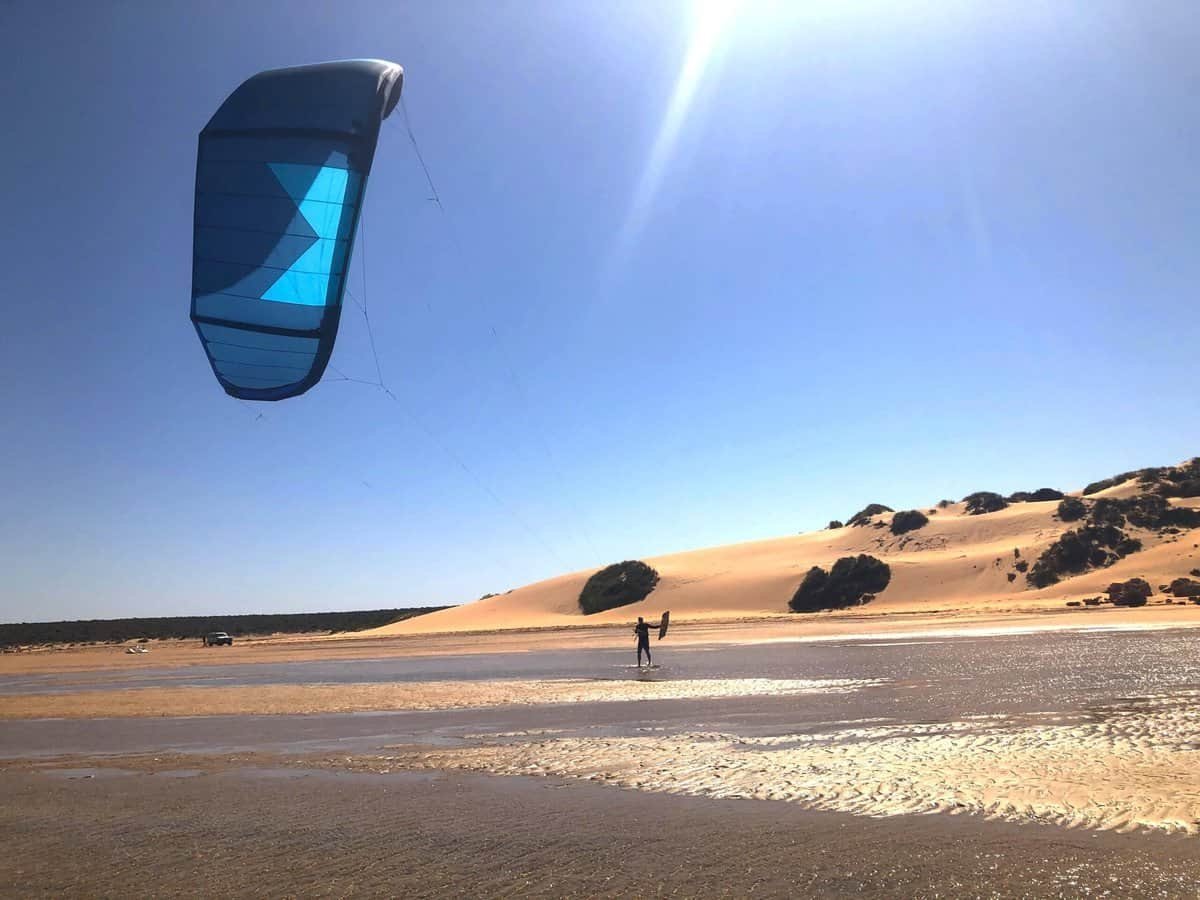
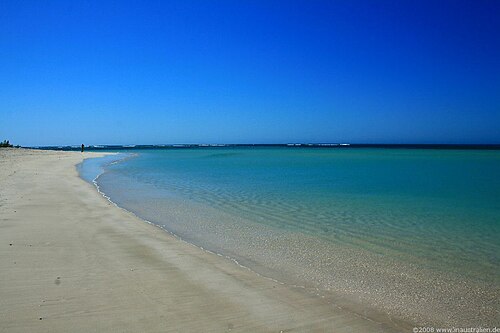
Safety Bay sits about 45 minutes south of Perth and is where many WA riders learn and progress. The lagoon-style setup delivers flat to choppy water with a consistent afternoon sea breeze through the summer months. It is a logical first stop if you are flying into Perth and want to shake off jet lag with a few sessions before heading north.
Peak season runs December through February. Wind direction is typically south-to-southwest, lining up well with the beach for a cross-shore to cross-onshore angle. Water temperatures are warm enough in summer to ride in boardshorts or a shorty, though spring and autumn riders often prefer a light wetsuit suited to the cooler water temperatures.
Check the Safety Bay spot page on Best Time to Ride for the exact windy-day count per month before you schedule your arrival.
Windy days: days with at least 2 hours of 15+ knots between 9:00 and 18:00, averaged over recent years. Averages over recent years from weather data; tap a spot for daily detail.
Lancelin: The Proving Ground
Lancelin, roughly 130 kilometres north of Perth, is one of Australia's most iconic kitesurfing spots and for good reason. The bay behind Lancelin Island and its reef gives you flatter water on the inside and reef and beach break on the outside, so you can pick your mood, freestyle laps or a bit of wave riding, in the same session.
The wind here is powerful. November through March is the season, with December and January the standout months, the southerly sea breeze arriving reliably each afternoon and often running into the early evening. Wind strength regularly sits in the 18–25 knot range during peak season, with stronger days on top, which suits intermediate and advanced riders. Beginners can find the conditions punchy.
Lancelin also hosts one of Australia's longest-running wind sports events, which tells you everything about how consistent the conditions are. If you want to build confidence before heading further north, spend a few days here first.
Best Time to Ride's Lancelin spot page shows the month-by-month breakdown of wind probability and strength so you can confirm whether your travel window lines up with peak season.
Windy days: days with at least 2 hours of 15+ knots between 9:00 and 18:00, averaged over recent years. Averages over recent years from weather data; tap a spot for daily detail.
Coronation Beach (Near Geraldton): The Most Consistent Stretch
Coronation Beach sits north of Geraldton, roughly five hours by road from Perth, and it regularly registers some of the most consistent wind statistics on the WA coast south of Shark Bay. The southerly trades here are less tied to a local sea-breeze mechanism and more driven by the broader pressure systems that push up the continent, which means the wind window is wider and more reliable than spots further south.
Peak season runs from October through March, giving you a longer window to plan around. November to January are particularly strong months. The beach is exposed and the wind blows cross-shore, creating good wave conditions for those who want to mix kite sessions with surfing on rest days.

Water temperatures are cooler than the tropical north, so a wetsuit appropriate for the season is recommended for winter visits. In summer, boardshorts are standard.
Use Best Time to Ride's Coronation Beach data to compare month-by-month windy-day counts and find the window that fits your itinerary.
Windy days: days with at least 2 hours of 15+ knots between 9:00 and 18:00, averaged over recent years. Averages over recent years from weather data; tap a spot for daily detail.
Shark Bay and Denham: Off the Beaten Track
Shark Bay is a UNESCO World Heritage region about nine hours north of Perth. The town of Denham sits on a peninsula and catches southerly winds with a flat-water bay that is ideal for downwinders and long cruising sessions. It is not the busiest kitesurfing stop on the WA coast, but riders who make the detour are rewarded with uncrowded water and striking scenery.
Conditions are best from October through March. If you are driving the full Perth-to-Exmouth route, Shark Bay makes a logical overnight stop where you can squeeze in a session and check the forecast for the next leg north.
Windy days: days with at least 2 hours of 15+ knots between 9:00 and 18:00, averaged over recent years. Averages over recent years from weather data; tap a spot for daily detail.
Coral Bay: Tropical Wind and Reef
Coral Bay is where the character of the coast shifts. You are now inside the Ningaloo Reef system, and the trade winds hit with a tropical consistency that feels different from the sea-breeze-driven spots further south. October through January delivers the most reliable cross-shore wind, with February and March still good, and warm, clear water over sand and coral.
The reef setup means you need to be aware of your riding area. Coral Bay is best suited to intermediate and advanced riders who can handle gusty trade-wind conditions and have solid upwind ability. The water is warm year-round, boardshorts territory through summer.
Check Best Time to Ride's Coral Bay page for wind probability by month to judge whether your dates will catch the trade winds at their most consistent.
Windy days: days with at least 2 hours of 15+ knots between 9:00 and 18:00, averaged over recent years. Averages over recent years from weather data; tap a spot for daily detail.
Gnaraloo: Wave Riding at Its Rawest
Gnaraloo is a former sheep station turned surf and kite camp, sitting a significant distance south of Exmouth along a remote stretch of coastline. It is not an easy spot to reach, the last section of road is unsealed, but riders who make the effort find one of Australia's most raw and rewarding wave-riding setups.
The wind is strong and the swell is real. South-to-southwest swells from the Indian Ocean break on the reefs at Tombstones near Three Mile Camp, creating wave conditions that reward experienced kiters. Flat water is not the story here.

Peak season is October through March. Wind strength is consistent and often in the stronger range, which pairs well with smaller kite sizes. Bring a quiver if you can. The remoteness also means you should carry spares, check your gear before you leave the last town, and have a plan for the drive out if something goes wrong.
Best Time to Ride's Gnaraloo data gives you the monthly wind picture so you can decide whether to build Gnaraloo into the beginning or end of your road trip based on where the wind is strongest.
Windy days: days with at least 2 hours of 15+ knots between 9:00 and 18:00, averaged over recent years. Averages over recent years from weather data; tap a spot for daily detail.
Exmouth: The Northern Anchor
Exmouth sits at the tip of the North West Cape and marks the northern end of this road trip. The peninsula geography means the town is exposed to wind from multiple directions, and the trade winds here are some of the most reliable on the continent. September through January is a broad peak season window, and many riders find October and November less crowded while still delivering strong conditions.
The Exmouth Gulf side offers flatter water for freestyle and freeride sessions. The ocean side delivers wind swell and the occasional clean south Indian Ocean groundswell for wave riders. The water is warm and clear year-round.
Exmouth is also a logical fly-in option if a full road trip is not possible. Learner courses operate here, but the standard trade-wind conditions are more suited to riders who already have solid kite control.
Before you book flights to Exmouth, check the spot page on Best Time to Ride to confirm that your target month sits inside the peak wind window.
Windy days: days with at least 2 hours of 15+ knots between 9:00 and 18:00, averaged over recent years. Averages over recent years from weather data; tap a spot for daily detail.
Esperance: The Southern Counterpoint
Esperance sits on the south coast of Western Australia, roughly eight hours southeast of Perth, and it operates on a different rhythm from the spots above. It is not on the northern road trip route, but it deserves a mention because its conditions are exceptional for riders who want powerful, consistent wind without the summer heat of the north.
The exposed south coast catches regular frontal systems and strong southerly swells, making Esperance a wave-riding and high-wind spot. It is best suited to experienced riders who enjoy punchy, variable conditions. Summer (November to February) is the most consistent period and autumn the quietest, but the spot can fire in almost any month when a solid front comes through.
Check Best Time to Ride's Esperance page for the monthly breakdown.
Windy days: days with at least 2 hours of 15+ knots between 9:00 and 18:00, averaged over recent years. Averages over recent years from weather data; tap a spot for daily detail.
Planning Your WA Road Trip by Month
Here is a quick reference for how to sequence the road trip depending on when you travel:
September–November: Coronation Beach, Shark Bay, Coral Bay, Gnaraloo and Exmouth are already firing. Lancelin is building toward peak season. A good window for riders who want to avoid the December–January crowds.
December–February: This is peak season for most of the corridor. December and January see every spot from Safety Bay to Gnaraloo at or near its best; by February Exmouth is lighter. Expect crowds at Lancelin in particular.
March: Conditions hold well at Shark Bay, Gnaraloo and Coronation Beach. Southern spots begin to soften and Exmouth is past its best. A good month for riders finishing a northern trip before returning to Perth.
April–August: Most spots are off-peak or low-wind. Esperance and Coronation Beach can still produce sessions during strong frontal events, but do not plan a dedicated kite trip around winter months without checking the data first.
Best Time to Ride covers all of these spots with 3-plus years of hourly weather records. Use the month-by-month windy-day statistics on each spot page to compare your options and build a road trip itinerary that follows the wind, not the calendar.
Frequently Asked Questions
What is the best time to kitesurf each month globally? The answer depends on the region. Best Time to Ride analyzes 3-plus years of hourly weather data across 567 spots in 90 countries to show you exactly which spots are at peak season in any given month. For Western Australia, December through February covers the peak wind window for most of the coast. For other regions globally, check the monthly planner on Best Time to Ride to find which spots are pumping in your target month.
Is Western Australia suitable for beginner kitesurfers? Some spots, Safety Bay in summer, the calmer sections of the Exmouth Gulf, offer conditions where learning is possible. However, many WA spots produce powerful wind and challenging chop or waves that are better suited to intermediate and advanced riders. Always check spot-specific wind strength data and get a qualified instructor assessment before riding in unfamiliar conditions.
What kite size should I bring to Western Australia? Wind strength across most peak-season WA spots runs in the range that suits smaller to mid-sized kites, particularly at exposed spots like Lancelin, Coronation Beach, and Gnaraloo. Check the wind strength data for your specific spots on Best Time to Ride and pack a quiver if you are riding multiple stops with different exposure levels.
Do I need a wetsuit for kitesurfing in Western Australia? In summer (December–February), water temperatures along the Perth coast and northward are warm enough for boardshorts or at most a shorty. Southern spots like Esperance run cooler year-round. Check the month you are visiting and the latitude of your target spot, Best Time to Ride includes water temperature context on spot pages.
How far in advance should I plan a WA kitesurfing road trip? Peak-season accommodation at popular spots like Lancelin and Exmouth fills early. Use Best Time to Ride's historical wind statistics to confirm your dates as early as possible, then book accommodation around the months that show the highest windy-day counts for your target spots.
Find Your WA Peak Season on Best Time to Ride
Western Australia's kitesurfing corridor is one of the most data-rich regions on Best Time to Ride, with hourly wind records across Safety Bay, Lancelin, Coronation Beach, Shark Bay, Coral Bay, Gnaraloo, Exmouth, and Esperance. Every spot page shows you the month-by-month windy-day breakdown, typical wind strength, and direction, everything you need to build a road trip itinerary around real conditions rather than guesswork.
Head to besttimetoride.com, find each spot on your route, and check the peak season data before you book. The wind is there. Find it.


